Fat pad impingement, also called infrapatellar fat pad syndrome or Hoffa’s syndrome, is a treatable, non-surgical cause of pain at the front of the knee. It happens when the soft, cushiony pad of tissue just below the kneecap gets pinched between the kneecap and the thigh or shin bone and becomes irritated and swollen. The pain usually sits right below the kneecap, feels sharp or burning, and gets worse when you straighten the knee fully or stand for a long time. The good news is that it almost always settles with the right conservative care, and surgery is rarely needed.
At Regenerative Joint Clinics in Riverdale, Georgia, we treat this kind of front-of-knee pain the way the evidence supports: find the real cause first, start with the gentlest effective steps, and keep stronger options in reserve. This guide explains what fat pad impingement is, why it hurts so much, how a provider tells it apart from other knee problems, and the step-by-step non-surgical plan that helps most people get back to normal activity.
If the pain below your kneecap has lasted more than a week or two, a focused evaluation is the fastest way to a clear answer and a plan.
What is the infrapatellar (Hoffa’s) fat pad, and why does it hurt so much?
The infrapatellar fat pad, named Hoffa’s fat pad after the surgeon who first described it, is a wedge of fatty tissue that sits just behind and to either side of the patellar tendon, below the kneecap. It is not padding you can ignore. Clinicians describe it as one of the most nerve-rich, pain-sensitive structures in the whole knee, which is exactly why even a small amount of pinching can set off sharp, burning pain out of proportion to how the knee looks. The pad also helps the knee sense its own position, so when it is irritated, the joint can feel unreliable.
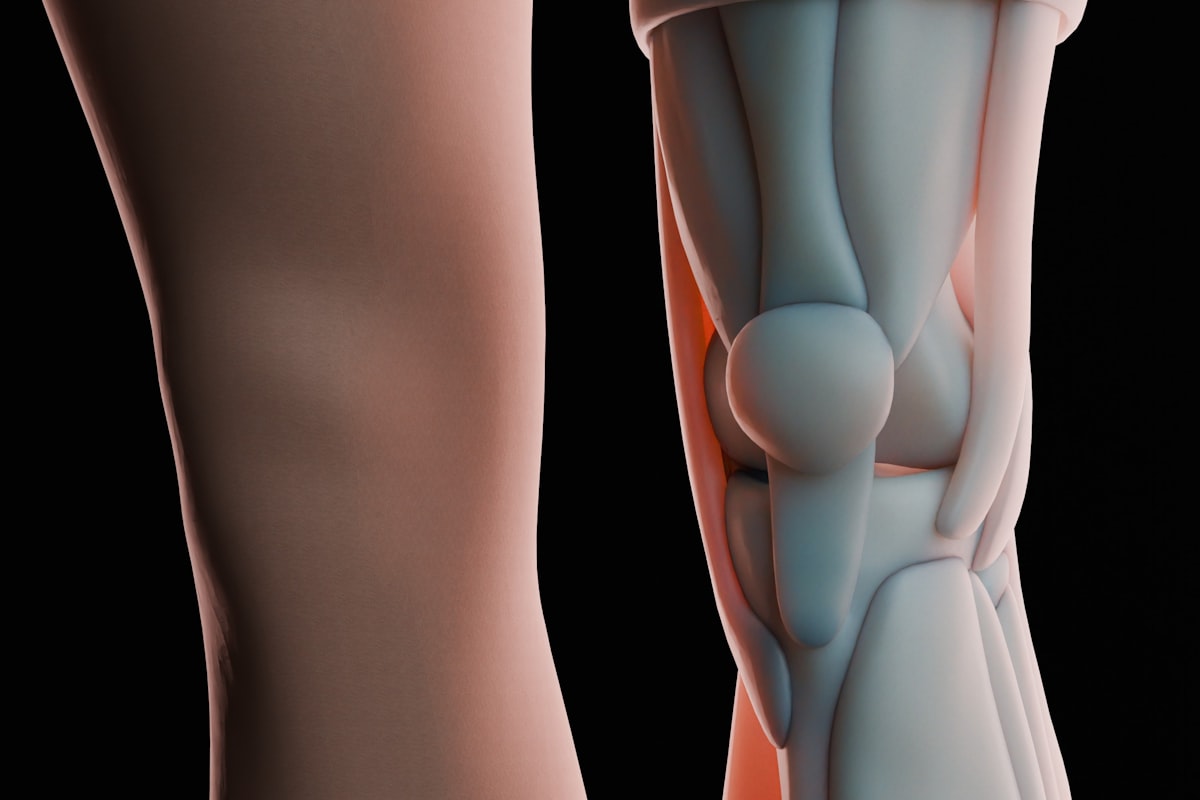
Because that pain sits in the same place as a cranky patellar tendon, fat pad irritation is frequently mistaken for patellar tendinitis, or “jumper’s knee.” That matters, because the two conditions are managed differently, and treating the wrong one wastes months.
This is where an in-room evaluation earns its keep. At our Riverdale clinic a provider reproduces the pain with a gentle forced-extension maneuver and a quads tightening test, then uses diagnostic musculoskeletal ultrasound to look at the fat pad and the patellar tendon directly. Seeing the tissue in real time lets us separate a pinched fat pad from tendinitis, a plica, or kneecap cartilage softening before a single treatment is chosen. A competitor article can describe the condition; it cannot look inside your knee.
What causes fat pad impingement?
There are two common roads to fat pad impingement. The first is a single event: a direct blow to the front of the knee, or forcing the knee past straight in a fall or awkward landing. The second is gradual, from repeatedly overextending the knee, which irritates the pad a little more each time until it swells and starts catching.
A few things make it more likely:
- A recent jump in activity, such as ramping up running, hiking, or a new workout program.
- Sports and jobs that push the knee into full extension again and again.
- Knee positions held at the extremes, fully locked out or deeply bent, for long stretches.
- Prior knee surgery or a previous knee injury in the same area.
- Foot mechanics, such as flat feet, that change how the knee loads.
It can affect anyone, but it is relatively common in athletes and uncommon in the general population, according to published clinical summaries. Older adults with arthritis changes around the kneecap can develop it too, which is part of why a careful evaluation matters: the fat pad problem and osteoarthritis can sit side by side.
What does it feel like? Symptoms to watch for
With fat pad impingement, the hallmark is pain at the front of the knee, deep to and on either side of the patellar tendon, near the lower point of the kneecap. People most often describe:
- A burning or deep aching pain below the kneecap.
- Pain that spikes when the knee straightens fully, when standing for a while, or when walking downhill or down stairs.
- Swelling or a puffy feeling just below the kneecap.
- Tenderness when you press on the soft spots beside the tendon.
- A sense that the knee does not want to fully straighten.
One practical clue: if standing with your knee locked straight makes the pain worse, and softening the knee a few degrees eases it, the fat pad is a strong suspect. That pattern is almost the opposite of many tendon problems, which tend to hurt more with loaded bending.
How is it diagnosed?
Diagnosing fat pad impingement starts with your story and a hands-on exam. A provider gently takes the knee into full extension to see if that reproduces your pain, and asks you to tighten the thigh muscle with the knee straight, which also provokes an irritated fat pad. Pressing on the tissue beside the patellar tendon usually finds the tender spot.
From there, imaging confirms the picture and rules out look-alikes. At Regenerative Joint Clinics we keep that imaging in-house: diagnostic musculoskeletal ultrasound to view the fat pad and nearby soft tissue, plus digital X-ray and fluoroscopy when we need to check the bones and the kneecap’s alignment. When a deeper look is warranted, MRI can support the diagnosis. The aim is simple and it shapes everything that follows: be sure it is the fat pad before treating the fat pad.
The non-surgical treatment plan, step by step
Fat pad impingement responds well to a staged, conservative plan, and most people improve without any procedure at all. The order below mirrors what the clinical sources recommend, from gentlest to strongest.
- Calm it down. Step back from the activities and positions that pinch the pad, especially anything that locks the knee out straight. Short-term ice and a simple anti-inflammatory, if your provider agrees it is safe for you, help settle the swelling.
- Stop the overextension. Much of the relief comes from keeping the knee out of its end-range. In physical therapy, approaches such as kneecap taping to unload the pad or a small heel lift are sometimes used, and simple changes to how you stand and walk can take the pressure off while the tissue recovers.
- Rebuild with physical therapy. Once the acute flare eases, targeted strengthening of the quadriceps and hip muscles, along with retraining how the knee moves, addresses the mechanics that let the pinching happen. RJC coordinates this through physical therapy by referral and gives you home exercises you can keep doing between visits.
- Support the knee. Where it helps, a properly fitted knee brace can limit the end-range positions that aggravate the pad. We fit medical-grade braces rather than fabricate them, and bracing coverage depends on your plan, which we confirm before anything is ordered.
- Consider a targeted injection. If a genuine, progressive course of the steps above has not settled things, an image-guided corticosteroid injection is one option a provider may discuss to quiet the inflamed tissue. It offers fast, short-term relief and is used sparingly, typically no more than three or four times in a joint per year, and it is a later step rather than a first move.

Surgery to trim the fat pad exists, but it sits at the very end of the line and is rarely necessary. Because Regenerative Joint Clinics is a non-surgical practice, our role is to exhaust the conservative options well, and to be honest with you if a surgical opinion is ever the right next step.
Where injections fit, honestly
It is worth being clear about injections, because patients often ask for a shot first. For fat pad impingement, a corticosteroid injection can help, but the evidence and good practice both put it later in the plan, after activity change and physical therapy have had a fair chance. Steroid relief is real but short-acting, and repeated injections into this area carry their own trade-offs, which is why frequency is kept low. A provider weighs all of that with you rather than defaulting to a needle. You can read more about how we use cortisone injections for short-term relief alongside longer-term options.
How we help at Regenerative Joint Clinics in Riverdale
Our single Riverdale clinic focuses on non-surgical joint care, and front-of-knee pain is squarely in that lane. A typical path looks like this: a focused evaluation with in-office diagnostic ultrasound to confirm the fat pad is the source, a conservative plan built around activity change and physical therapy by referral, and selective use of an image-guided injection only if it is needed. If your knee pain turns out to be driven by something else, such as patellar tendinitis or arthritis, we adjust the plan to match, because the diagnosis drives the treatment, not the other way around.
We see patients from Riverdale and across the south metro, including Jonesboro, Morrow, Forest Park, and College Park. You can explore our full range of non-surgical joint pain services, and if you are weighing your options, our providers are glad to talk through what a realistic recovery looks like for your knee.
Simple changes that take pressure off the fat pad
Most of the day-to-day relief comes from keeping the fat pad out of the position that pinches it. A few habits make a real difference while the tissue settles.
Avoid standing with the knee locked straight for long stretches. When you wait in line or stand at a counter, let the knee stay a few degrees soft, or shift your weight from leg to leg.
Ease back into hard activity rather than stopping completely. Short, frequent walks on level ground usually feel better than long sessions, deep squats, or anything that forces the knee fully straight under load.
Pay attention to footwear and surfaces. Supportive shoes and softer ground reduce the jolt through the front of the knee, and a provider can tell you whether a simple insole is worth trying for your foot mechanics.
These steps are not a substitute for a diagnosis, but they protect the pad between visits and make the rehab work that follows more effective.
When should you see a provider?
Mild, brief front-of-knee soreness after a hard day often settles on its own. Get it looked at sooner if the pain has lasted more than a week or two, if the knee will not fully straighten, if there is noticeable swelling below the kneecap, or if the pain is interfering with work, sleep, or the activities you care about. Early, accurate care tends to mean a shorter recovery.
Is it serious?
It is painful but not dangerous, and it is not the same as a torn ligament or a fracture. The main risk is letting it drag on, because an unaddressed pad can keep getting pinched and stay inflamed for months.
How long does it take to recover?
Recovery depends on how long the pad has been irritated and how well the aggravating positions are avoided. Many people improve meaningfully over several weeks of consistent conservative care, though stubborn cases take longer. A provider can give you a more specific timeline after an evaluation.
Can I keep exercising?
Usually yes, with changes. The goal is to keep moving while avoiding the end-range extension and the activities that spike the pain. A physical therapy program is built to let you stay active while the pad calms down.
Does insurance cover treatment?
Evaluations and many treatments are covered by most major medical plans and Medicare. PRP, where it is used for other knee conditions, is usually an elective self-pay option. We confirm your specific coverage before anything is ordered.
This article is for general education and is not medical advice. Consult your healthcare provider before starting any new treatment.