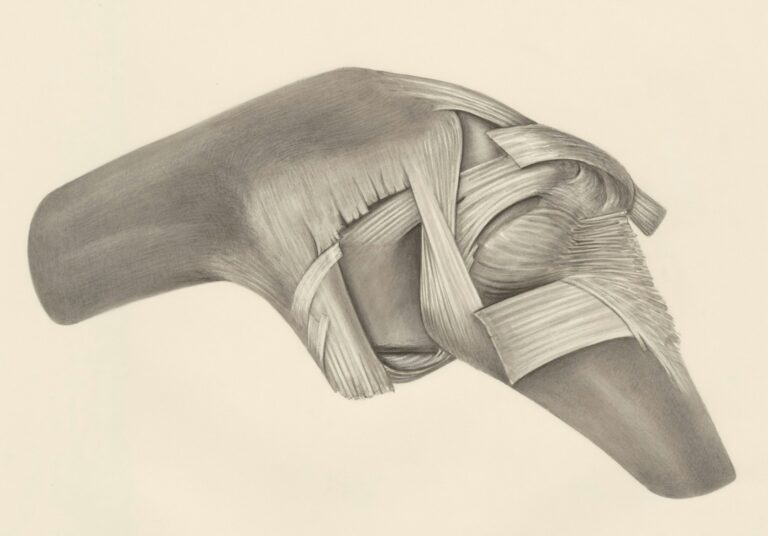
A knee arthritis flare up is a stretch of days or weeks when an arthritic knee suddenly hurts far more than it normally does. The joint often feels hot, puffy and stiff, stairs become a negotiation, and the pain does not settle by bedtime the way an ordinary bad day does. In the first 48 hours the goal is simple: calm the joint down without shutting it down. That means short, frequent cold on the knee, gentle range of motion rather than bed rest, unloading the joint where you can, and giving it two to three days before you decide anything is seriously wrong. Most flares settle on their own. Some do not, and those are worth a phone call.
This guide covers what a knee arthritis flare up actually is, what sets one off, how long to expect it to last, the eight things that help most in the first two days, and the point at which a flare stops being a flare and starts being a sign that the underlying joint needs attention. At Regenerative Joint Clinics in Riverdale, GA, we see the same pattern every week, and the patients who ride out a flare best are usually the ones who acted early and did less, not more.
Near Riverdale, GA?
We treat knees, shoulders, hips and backs without surgery at one clinic on Upper Riverdale Road. Send the form or call and our team will confirm your visit.
483 Upper Riverdale Road SW, Suite F, Riverdale, GA 30274. Most major insurance and Medicare accepted. PRP is typically elective and not covered by most plans, and our team can walk you through payment plans through Pathways.
Key takeaways
- A knee arthritis flare up is a change in your baseline knee pain that comes on quickly and lasts at least 24 hours.
- Most flares settle in a few days. Some run one to three weeks, and a documented case ran 23 days.
- Cold helps a hot, swollen knee. Heat suits a stiff, cold knee. Neither should sit on the skin for more than 15 minutes at a time.
- Complete rest backfires. Keep the joint moving through whatever range you can manage.
- Repeated knee arthritis flare up episodes in the same knee are the signal to get the joint looked at, not to keep managing it at home.
What Is a Knee Arthritis Flare Up?
Researchers studying flares in primary care settled on a workable definition: a change in the patient’s baseline pain that goes beyond normal day to day variation, is sudden or quick in onset, and holds for at least 24 hours. That last clause is the useful one. A knee that aches after a long afternoon in the garden and feels normal again by morning was not a flare. A knee that wakes up angry on Tuesday and is still angry on Thursday was.
Underneath the pain, what usually changes during a knee arthritis flare up is the joint lining. The synovium becomes inflamed and produces extra fluid, which is why a flaring knee often looks visibly bigger and feels tight when you try to bend it fully. That extra fluid is also why a flare can make the knee feel unstable even though no ligament has been damaged. If the swelling is pronounced enough that the kneecap feels like it is floating, that is worth reading about separately in our guide to fluid on the knee.

A knee arthritis flare up also gets confused with two other things. Ordinary morning stiffness in an arthritic knee loosens within about 30 minutes of moving around and returns the next morning in the same shape. A flare does not loosen off on that schedule. And a weather ache, covered in our piece on cold weather joint pain, tends to arrive with a front and leave with it. A knee arthritis flare up has its own timeline.
What Triggers a Knee Arthritis Flare Up?
Ask ten people what sets off a knee arthritis flare up and you will get ten answers. In the primary care study above, participants named their own triggers, and the striking finding was how little they agreed with one another. Rising from a seated position, kneeling, walking with the knee already stiff, cold and damp weather, and plain overactivity all showed up. One person’s reliable trigger was another person’s non event.
In clinic, the pattern we hear most often is a spike in load that the knee was not conditioned for. A weekend of yard work after a quiet month. Two long days on concrete floors. A move, a trip, a stretch of stairs the knee does not normally climb. The knee does not object during the activity. It objects 12 to 36 hours later, which is exactly the lag that makes people blame the wrong thing.
So keep a rough note of what the two days before a flare looked like. After three or four of them, most patients can name their own trigger, and that changes the conversation at an appointment from “my knee hurts” to “my knee flares whenever I do more than about 6,000 steps,” which is something a treatment plan can work with.
How Long Does a Knee Arthritis Flare Up Last?
Honestly, the range is wide, and anyone giving you a single number is guessing. In the primary care study, half the participants reported at least one flare across a nine week window, and the two flares that were tracked all the way to resolution lasted 7 days and 23 days. Clinical experience lines up with that spread. A mild knee arthritis flare up often quiets down inside two or three days. A moderate one can occupy a week or two. A stubborn one, usually in a knee with more advanced joint changes, can hang around for the better part of a month.
What matters more than the calendar is the direction of travel. A flare that is 20 percent better on day four is behaving normally, even if it is still uncomfortable. A flare that is flat or worse on day four is telling you something different, and that is the point where home care has done what it can. If you want a fuller picture of where your knee sits structurally, our guide to the stages of knee osteoarthritis explains how joint changes map onto symptoms.
The First 48 Hours: 8 Steps That Help
None of the following requires equipment you do not already own, and the whole point is to start early. The Arthritis Foundation puts it plainly: a key part of managing a flare is tackling it as early as possible.
- Cool the joint, briefly and often. Cold constricts blood vessels and takes the edge off an inflamed knee. Fifteen minutes at a time, two to four times a day, with a cloth between the pack and your skin. Longer is not better.
- Save heat for stiffness, not swelling. Heat increases blood flow and relaxes muscle, which is why it suits a stiff, achy knee. Avoid it while the joint is visibly swollen or warm to the touch.
- Keep moving, gently. This is the step people get wrong. Rest does not mean stop. Move the knee through the fullest range you can manage, several times a day, even if the range is small. A knee that is immobilised for three days comes back stiffer than the flare made it.
- Take the load off without going to bed. Shorter walks, more of them. Sit for tasks you would normally stand for. If you have an unloader knee brace already fitted, a flare is exactly when it earns its keep.
- Elevate when the knee is puffy. Twenty minutes with the leg above hip height, a few times through the day, helps the extra joint fluid drain rather than pool.
- Sleep with support. A pillow under the knee if you sleep on your back, or between the knees if you sleep on your side, keeps the joint out of the end range positions that wake people at 3am.
- Use topical relief before oral. The 2019 American College of Rheumatology and Arthritis Foundation osteoarthritis guideline strongly recommends topical anti inflammatories for knee osteoarthritis and suggests trying them before oral versions. Any medication decision belongs with your own physician or pharmacist, particularly if you take blood thinners or have kidney or stomach history.
- Write down day one. Date, what you did the two days before, how bad it is out of ten. It takes 30 seconds and it turns a vague history into something a clinician can use.
Once the acute phase settles, the single best thing you can do to reduce the odds of the next knee arthritis flare up is to build the muscle around the joint back up. Our list of exercises for knee osteoarthritis is a reasonable starting point, and it is deliberately low load.
What to Skip During a Knee Arthritis Flare Up
Three habits reliably make a knee arthritis flare up last longer. The first is total rest. Two days on the sofa converts a flare into deconditioning, and deconditioning is not weather dependent or trigger dependent. It just stays.
The second is pushing through. There is a middle ground between bed rest and testing the knee on a flight of stairs to see whether it still hurts. It still hurts. Deliberately provoking the joint during a flare buys you nothing and often extends it by several days.
The third is starting something new. A flare is the worst moment to begin a fresh exercise programme, a new supplement, or a stretching routine you found online, because the flare was going to change on its own anyway and you will never know what did what. Wait until the knee is back to baseline, then change one thing.
When a Flare Is Telling You Something Else
Most of the time a knee arthritis flare up is exactly what it looks like. A few presentations are not, and they deserve prompt medical attention rather than another ice pack. A knee that is hot, red and accompanied by fever needs urgent assessment, because joint infection is treated on a different clock entirely. A knee that gave way and swelled within an hour of a specific twist or fall is more likely a mechanical injury than a flare. Calf pain and swelling below the knee, particularly after a long flight or a period of immobility, is a separate concern that needs same day advice.
Short of those, the Arthritis Foundation’s guidance is that pain which keeps getting worse, or which does not respond to ice, heat or an over the counter anti inflammatory, is a signal that the underlying condition may be progressing. So is a pattern of repeated flares. Our article on when it is time to seek professional help for joint pain goes through the thresholds in more detail.
How We Approach a Knee Arthritis Flare Up in Riverdale
When a patient comes in during a knee arthritis flare up, the first job is to work out whether we are looking at an inflamed joint that needs settling or a joint that has changed. We score the knee against the patient’s own baseline using the WOMAC osteoarthritis index, and we image it when the picture does not match the history. That comparison against a recorded baseline is the part patients notice, because it turns “worse than usual” into a number that can be tracked at the next visit.
From there we have three distinct in clinic responses to an acute knee, and which one we use depends on the joint in front of us. If the knee is carrying a significant effusion, joint aspiration to draw off the excess fluid often relieves the pressure directly, and it lets any injection that follows reach the joint rather than a pocket of fluid. If the flare is genuinely acute and inflammatory, a corticosteroid injection can settle it quickly, with the caveat that steroid injections are clinically limited to roughly three or four per joint per year. And for patients who have reached that limit, or who would rather not use a steroid at all, Sarapin is a non steroidal botanical injectable we keep on the menu precisely for this situation.
Settling the flare is only half the work. The reason a knee flares repeatedly is usually the state of the joint underneath, which is what our Targeted Restoration Protocol is built to address: image guided hyaluronic acid gel injections, unloading knee bracing, referrals for physical therapy, and platelet rich plasma where it is appropriate. On coverage, the honest split is that the diagnostics and the hyaluronic acid gel injections are generally covered by most major medical plans and Medicare, while platelet rich plasma is usually treated as elective and is not covered. Bracing coverage depends on your plan and is confirmed before anything is ordered. If cost is the question you actually have, our page on knee gel injection costs lays out the numbers, and we use Pathways for payment plans. For the wider picture of the condition itself, start with our guide to understanding osteoarthritis.
One practical scheduling note, because flares have poor timing. Our Riverdale clinic is open Monday through Wednesday from 9:00 AM to 5:00 PM and Thursday from 9:00 AM to 3:00 PM, and we are closed Friday through Sunday. A flare that starts on a Friday evening is a weekend of home care before anyone can look at it, which is another argument for starting the cold, the gentle movement and the notes on day one rather than day three.
Frequently Asked Questions
How do I know if it is a knee arthritis flare up or a new injury?
Timing is the clearest clue. A flare usually builds over hours and follows a period of extra load, while an injury tends to have a moment attached to it: a twist, a fall, a pop. If the knee swelled inside an hour of a specific incident, or it locks and will not straighten, treat it as an injury and get it assessed rather than waiting it out.
Should I use ice or heat during a knee arthritis flare up?
Use cold while the knee is swollen, warm or freshly painful, which is most of the first 48 hours. Switch to heat once the swelling has gone down and what is left is stiffness. Either way, the Arthritis Foundation advises no more than 15 minutes at a time, two to four times a day.
Can I still walk during a knee arthritis flare up?
Yes, and you generally should. Shorter and more frequent is the pattern that works: several 5 to 10 minute walks rather than one long one, on flat ground, with the stairs and hills left alone until the knee settles. The aim is to keep the joint moving without loading it repeatedly.
How many knee arthritis flare ups per year is too many?
There is no official threshold, but flares that start interrupting work, sleep or exercise on a recurring basis have stopped being a nuisance and become a pattern. At that point have the joint evaluated, because repeated flares usually reflect what is happening in the joint between them.
Will a cortisone injection stop a flare straight away?
Not instantly. Relief from a corticosteroid injection typically begins within a few days, and a brief increase in pain over the first day or two is a recognised and normal response. Steroid injections are also limited to roughly three or four per joint per year, so they work best as a way to settle an acute knee rather than as an ongoing strategy.
Talk to Us About a Knee That Keeps Flaring
If your knee has flared more than once or twice this year, the flares are worth investigating rather than absorbing. Regenerative Joint Clinics is at 483 Upper Riverdale Road SW, Suite F, Riverdale, GA 30274. Call (470) 895-0610, email contact@regenerativejointclinics.com, or book an evaluation and we will look at what is driving them.
Medical disclaimer: this article is general education about knee arthritis flare ups and is not medical advice. It does not replace an in person evaluation, and it is not a diagnosis or a treatment recommendation for your knee. Talk to a qualified healthcare professional about your own symptoms, and seek urgent care for a hot, red joint with fever, a knee that will not bear weight, or calf swelling.
Sources: Thomas MJ et al., “Acute flares of knee osteoarthritis in primary care: a feasibility and pilot case-crossover study,” Pilot and Feasibility Studies, 2018. Arthritis Foundation, Tips to Manage Arthritis Flares. Kolasinski SL et al., “2019 American College of Rheumatology/Arthritis Foundation Guideline for the Management of Osteoarthritis of the Hand, Hip, and Knee,” Arthritis & Rheumatology, 2020.
For the broader picture beyond a single flare-up, see our guides to knee pain treatment in Riverdale, GA and arthritis treatment in Riverdale, GA.