Runner’s knee is the everyday name for patellofemoral pain syndrome (PFPS), a dull, aching pain felt around or behind the kneecap. It is one of the most common knee complaints in active people, and despite the name you do not have to be a runner to get it. Walking downstairs, squatting, kneeling, or sitting for a long stretch with the knee bent can all set it off. The pain comes from the way the kneecap tracks and loads against the thighbone during movement, not from a single injury, which is why it tends to build up gradually rather than arrive all at once.
The reassuring part is that runner’s knee is almost always manageable without surgery. Most people improve with the right mix of activity changes, targeted exercise, and patience. The goal of this guide is to explain what the condition is, what it feels like, what causes it, and the non-surgical options a clinic like ours in Riverdale, GA uses to help you get back to the activities you enjoy.
If kneecap pain is slowing you down, our team can evaluate it and build a non-surgical plan. Call (470) 895-0610 or book an evaluation. Most major medical plans and Medicare are accepted; PRP is typically elective and not covered. We also offer a range of non-surgical joint pain treatment options for the knee.
What is patellofemoral pain syndrome?
Patellofemoral pain syndrome describes pain at the front of the knee, where the kneecap (patella) meets the groove at the end of the thighbone (femur). When you bend and straighten your knee, the kneecap glides through that groove. If it does not track smoothly, or if the joint is loaded more than it can comfortably handle, the surrounding tissue becomes irritated and sore. That is runner’s knee in plain terms: an overload and tracking problem at the kneecap, rather than a tear or a broken bone.
Clinical guidelines from the American Physical Therapy Association, summarized for physicians by the American Academy of Family Physicians in 2020, point in a clear direction: the first-line treatment is conservative care, built around exercise that strengthens the hip and thigh muscles, along with sensible activity changes. The same guidelines note that the evidence for injections is limited, and surgery is rarely part of the picture. In other words, the treatments that help most are also the least invasive.
Where a clinic earns its keep is in getting the diagnosis right before any plan begins. Front-of-knee pain can also come from chondromalacia patella, a softening of the cartilage under the kneecap, or from grinding and clicking in the kneecap tied to early joint wear. At our Riverdale office we confirm what is actually driving your pain using a hands-on exam, digital X-ray, fluoroscopy, and diagnostic musculoskeletal ultrasound, then match the plan to the finding. That step is what keeps you from treating the wrong problem.

What does it feel like?
The classic symptom is a dull ache around or just behind the kneecap. It is usually vague rather than sharp, and it is often hard to point to one exact spot. Common patterns include:
- Pain that worsens with running, especially downhill, or with squatting, kneeling, and climbing or descending stairs.
- A deep ache after sitting for a long time with the knee bent, sometimes called the “theater sign.”
- A sense of rubbing, grinding, or clicking when you bend and straighten the knee.
- Tenderness around the edges of the kneecap, and occasional mild swelling after activity.
Runner’s knee rarely causes the knee to lock or give way. If your knee catches, buckles, or swells dramatically, that points toward a different problem and is worth having looked at promptly.
What causes it?
There is seldom a single cause. More often, several small factors add up until the kneecap is loaded more than it can tolerate. The usual contributors are:
- Muscle imbalance or weakness, particularly in the hip and thigh muscles that help steer the kneecap. Weak hips let the knee drift inward, which changes how the kneecap tracks.
- Training errors, such as a sudden jump in mileage, more hills, or harder surfaces before the body has adapted.
- Alignment and mechanics, including flat feet or the natural shape of your legs, which can nudge the kneecap off its ideal path.
- Tight tissues, such as tight hamstrings, calves, or the band along the outside of the thigh.
Because the causes are layered, a lasting fix usually means addressing more than one of them. Understanding how running affects your knees can help you spot which of these is at play for you.
How is it diagnosed?
Diagnosis starts with your story: when the pain began, what makes it better or worse, and how your activity has changed. A physical exam checks how the kneecap moves, where it is tender, and how strong and flexible the surrounding muscles are. From there, imaging helps rule out look-alike problems.
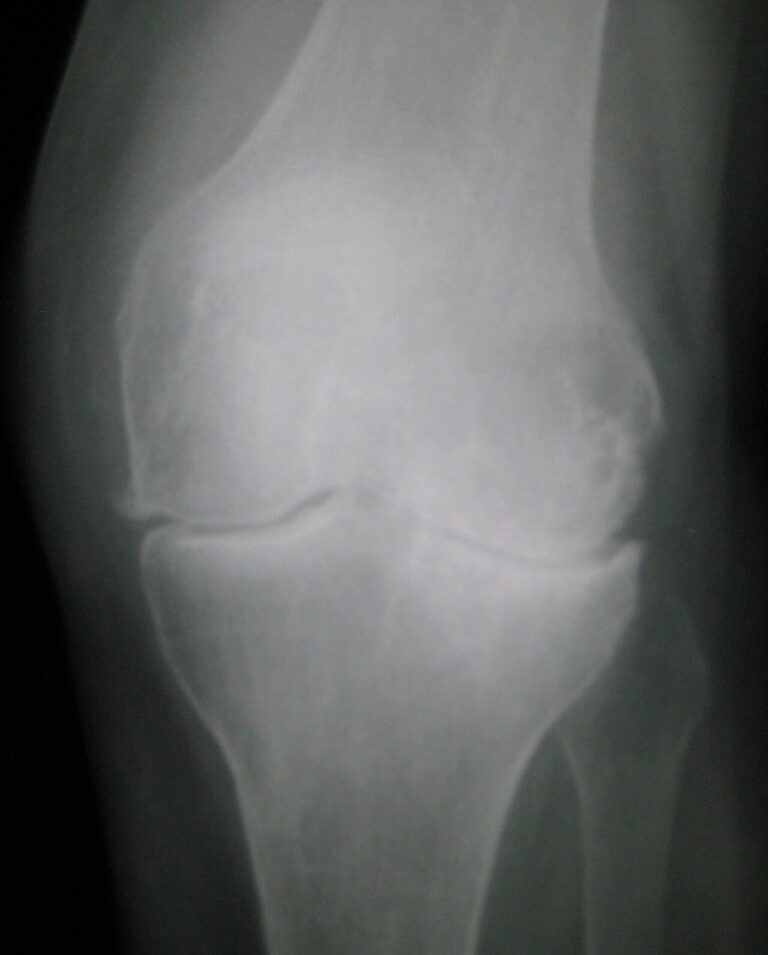
At our Riverdale clinic the imaging stack includes digital X-ray to look at joint spacing and alignment, fluoroscopy for a guided view when needed, and diagnostic musculoskeletal ultrasound to assess the soft tissue around the kneecap in real time. We also use a standardized knee questionnaire to track your pain and function over time. The point of all of this is not to collect tests for their own sake. It is to separate straightforward runner’s knee from conditions like early arthritis, a cartilage problem, or a tendon issue, because each one is managed differently.
How is it treated without surgery?
Treatment follows the evidence, and the evidence favors patience and movement over quick fixes. A typical plan combines several steps:
- Activity modification. Dialing back the aggravating load for a while, then rebuilding gradually, gives irritated tissue a chance to settle. For runners that can mean shorter runs, flatter routes, and small changes to stride and cadence.
- Exercise and physical therapy. Strengthening the hip and thigh muscles is the cornerstone of recovery, and the benefit can last for years. Our plans include physical therapy by referral along with a home program you can keep doing. For a sense of the kind of movements involved, our guide to knee-friendly exercises is a useful starting point, though your own program should be tailored to you.
- Supportive measures. Patellar taping, over-the-counter foot inserts, and short-term use of ice can ease symptoms for some people while the strengthening work takes hold. These are helpers, not cures, and the research behind them is modest.
What about injections? For runner’s knee itself, the guidelines describe the evidence for injections as limited, so they are not a first step. Where they can have a role is when imaging shows a coexisting problem, such as early arthritis under the kneecap, where a well-placed injection may calm a flare. In those cases we talk through the options honestly, including cortisone injections for short-term relief of an acute flare, and platelet-rich plasma (PRP), a regenerative option that uses a concentrated portion of your own blood. PRP is elective and typically not covered by insurance; you can read more about what PRP injections cost before deciding. We never push an injection when conservative care is the better fit, and we never suggest surgery for a problem that does not need it, because runner’s knee rarely does.
When should you see a provider near Riverdale?
Mild runner’s knee often eases with rest and a smarter return to activity. It is worth having a professional look if the pain has lasted more than a few weeks, keeps returning whenever you resume activity, or is getting in the way of walking, stairs, or sleep. It is also worth a visit if you are unsure whether what you have is really runner’s knee or something else, since the right plan depends on the right diagnosis.
Our clinic at 483 Upper Riverdale Rd SW, Suite F, Riverdale, GA 30274 serves active adults across the south Atlanta area, and the whole approach is non-surgical. If you are ready to get the pain evaluated, call (470) 895-0610 or reach out to our team.
Runner’s knee: common questions
Can I keep running with it? Often yes, in a reduced form, as long as the pain stays mild and does not worsen during or after the run. Cutting back mileage, avoiding hills for a while, and adding hip and thigh strengthening usually lets you keep moving while you heal. Sharp or worsening pain is a signal to stop and get it checked.
How long does it take to get better? Many people notice improvement within six to eight weeks of consistent exercise and activity changes, though stubborn cases can take longer. Because the condition builds up over time, it tends to settle gradually rather than overnight.
Do I need an MRI? Usually not. A careful exam plus X-ray or ultrasound is enough for most cases. Advanced imaging is reserved for situations where the picture is unclear or a different injury is suspected.
Is it the same as arthritis? No. Runner’s knee is a tracking and overload problem, while arthritis involves wear of the joint surfaces. They can overlap, which is one more reason a clear diagnosis matters before starting treatment.
This article is for general education and is not medical advice. Consult your healthcare provider before starting any new treatment.
Related: non-surgical sports medicine and injury recovery in Riverdale, GA.